

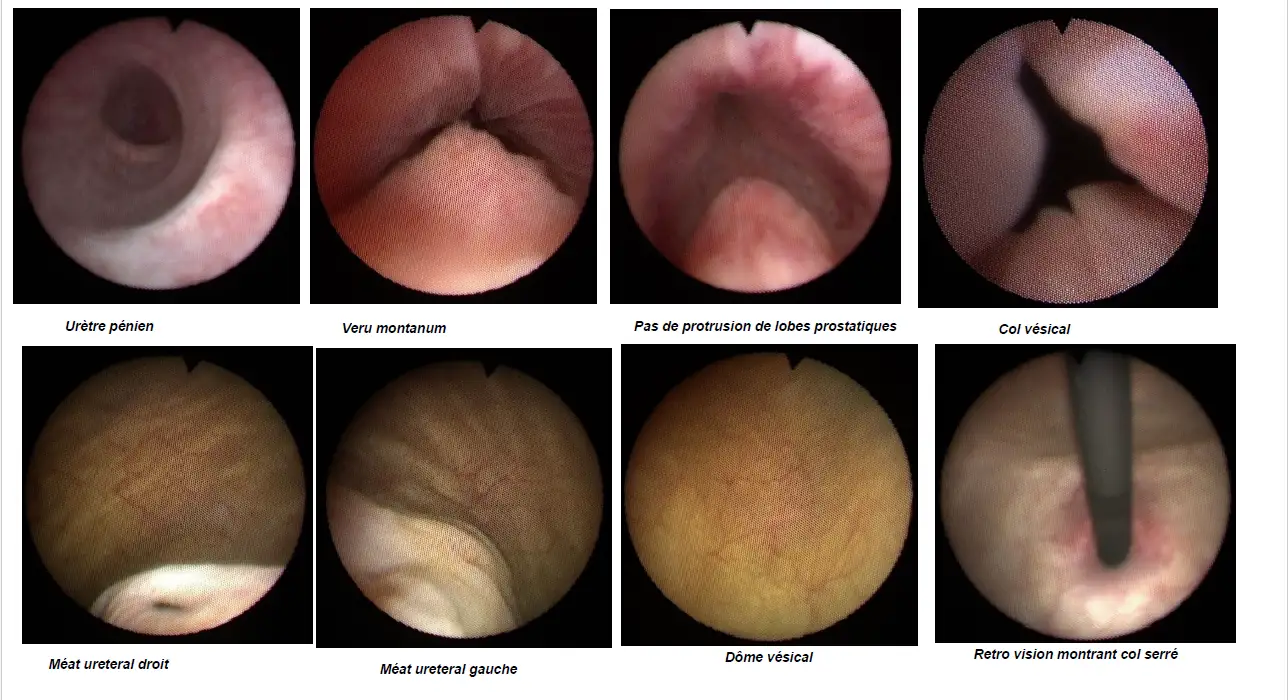
Cystoscopy (or urethrocystoscopy) is an examination performed by a urologist to look directly inside the urethra, the prostate (in men) and the bladder using a thin camera called a cystoscope.
This examination is an essential tool for making an accurate diagnosis and guiding treatment. It is performed in the clinic, without a hospital stay, under strict hygiene conditions.
Why have a cystoscopy?
Your urologist may suggest a cystoscopy in the following situations:
- blood in the urine (haematuria);
- difficulty urinating or a weak stream;
- burning on urination that persists despite treatment;
- recurrent urinary tract infections;
- suspected narrowing of the urethra (stricture);
- assessment of an enlarged prostate;
- investigation of urinary incontinence;
- suspected bladder stone;
- suspected bladder tumour;
- unexplained urinary pain;
- follow-up after treatment of a bladder tumour.
How is the examination carried out?
Before the examination, an anaesthetic gel is placed in the urethra to reduce discomfort.
The urologist then gently inserts a flexible or rigid cystoscope into the urinary tract.
The examination looks in turn at:
- the urethra;
- the prostate in men;
- the bladder neck;
- the ureteric orifices;
- the whole bladder.
The whole examination usually takes 5 to 10 minutes.
Is it painful?
This is the question patients ask most often.
The answer is no, in the vast majority of cases.
You may feel:
- a slight burning sensation;
- an urge to urinate during the examination;
- brief discomfort as the instrument passes.
Thanks to the anaesthetic gel and the urologist’s experience, cystoscopy is usually very well tolerated.
After the examination
For a few hours it is normal to have:
- slight burning when urinating;
- a few drops of blood in the urine;
- a frequent urge to urinate.
These symptoms usually disappear within 24 to 48 hours.
It is advisable to:
- drink plenty of fluids (1.5 to 2 litres of water during the day);
- urinate regularly;
- resume your normal activities as soon as you get home.
When should you contact your urologist again?
Contact your doctor promptly if you develop:
- a fever above 38 °C;
- chills;
- an inability to urinate;
- heavy bleeding with clots;
- severe pain that persists.
These situations are rare.
Technology for an accurate diagnosis
Cystoscopy allows direct examination of the urinary tract and can detect:
- an enlarged prostate;
- a urethral stricture;
- a bladder tumour;
- a bladder stone;
- chronic inflammation;
- a bladder diverticulum;
- an abnormality of the bladder neck;
- lesions caused by infection or schistosomiasis (bilharzia).
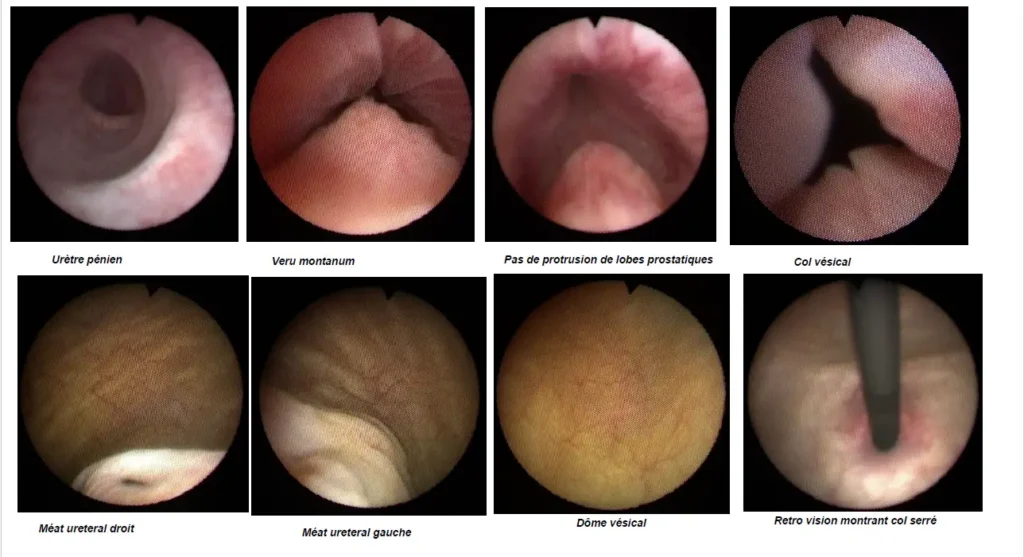
The images can be recorded and explained to the patient so that he or she understands the diagnosis.
A message from your urologist
Cystoscopy is a routine examination in urology. It is quick, done under local anaesthesia without a hospital stay, and gives an accurate diagnosis without surgery. In the vast majority of cases, patients are pleasantly surprised by how simple and well tolerated it is. Feel free to ask your urologist any questions before the examination: your comfort, safety and care are our priority.

